Home

Friday, February 20, 2015

Studio - Construction - Foundation Insulation

Here is Jeff adding insulation and waterproofing to the wall down the centre of the crawl space. There is a black sticky waterproof layer between the foam and the concrete. Concrete is porous. It needs a waterproof barrier to stop water from wicking up from the ground and out of the sides of the wall and into the crawl space floor.
Concrete is strong but it is a poor insulator. Jeff is nailing closed cell insulation foam panels to the interior wall to stop the cold from the ground working its way up the wall and out into the crawl space.


This is the crawl space floor drain. The hot water tank will be located directly under the sink, in the crawlspace. This drain is a safety feature, in case the hot water tank fails.


A roll of fabric on a construction site? Who knew?

But before I could think of how I could use this fabric it was being put in place under the perimeter drain pipes. Its job is to stop plant roots from growing into the pipe in search of water then blocking the drain.

I hear lots of power tools being used throughout the day, but the hammer still seems to be the carpenter's main tool.


Tuesday, February 17, 2015

Studio - Construction - Foundation Waterproofing

In a previous post, I showed the foundation being poured between foam Lego blocks, here
The next step was sticking a waterproof membrane to the outside of the foam blocks - see the blue layer above.
Next the foundation wrap, Delta - MS, was rolled out and nailed in place with orange fasteners that fit into the dimples with a nail driven into the centre.
The black mold strip is yet to be installed on top of the brown foundation wrap.

The wrap is rolled out on the outside of all of the foundation walls.

Here is a diagram from the roll wrapper showing how it protects the foam once the backfill is in place. The dimples channel all water away from the wall and down to the drain at the bottom of the foundation keeping the basement dry. There will be no 'rising damp' in this basement.

Here is the basement wall with its 2 waterproofing layers. An important feature of any building in a rainforest.

A carpenter's tools.

Saturday, February 14, 2015

Etsy, Ravenmade Works New Pillows

I'm getting ready to list more pillows on my Etsy Shop, Ravenmade Works Shop, but I want to know more about the textiles they are made of, where they came from, and who made them. I want to include this information in the description of the pillows.

Hand spun, hand woven wool fabric is embroidered with wool in geometric, counted cross stitch designs.

I had a successful bid for them at an auction house. 
They were bags that I took apart and "refreshed" as pillows.

If you know anything about this type of work, could you please add a comment to this post or email me with your suggestions - ravenmade@gmail.com. 
Thank you for satisfying my curiosity.

Wednesday, February 11, 2015

Morocco - A Country's Food Is Always Interesting

Squash Stall, Middle Atlas Mountains

Carb Shop - pasta, beans, flours

Herb and Spice Shop

Date Shop
There are 24 different types of dates in Morocco.


Olive Shop
Eaten as an appie at lunch and dinner and as a snack anytime.


Olive Shop
Olives pickled in different vinegars, soaked in water to make olive water for cooking.


Vegetable Shop
Fresh winter vegetables come into the medinas every morning from the fertile interior farmlands.


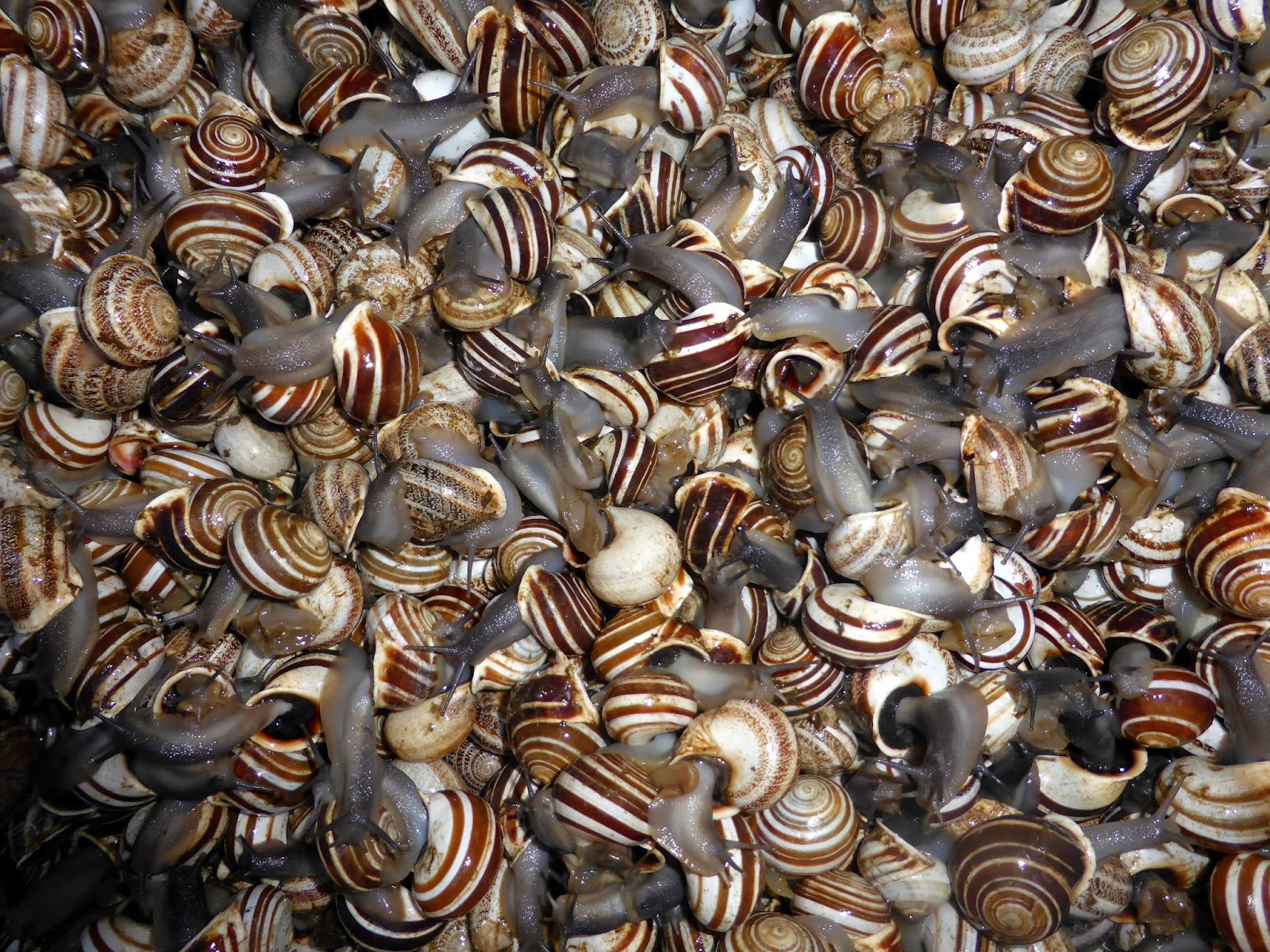
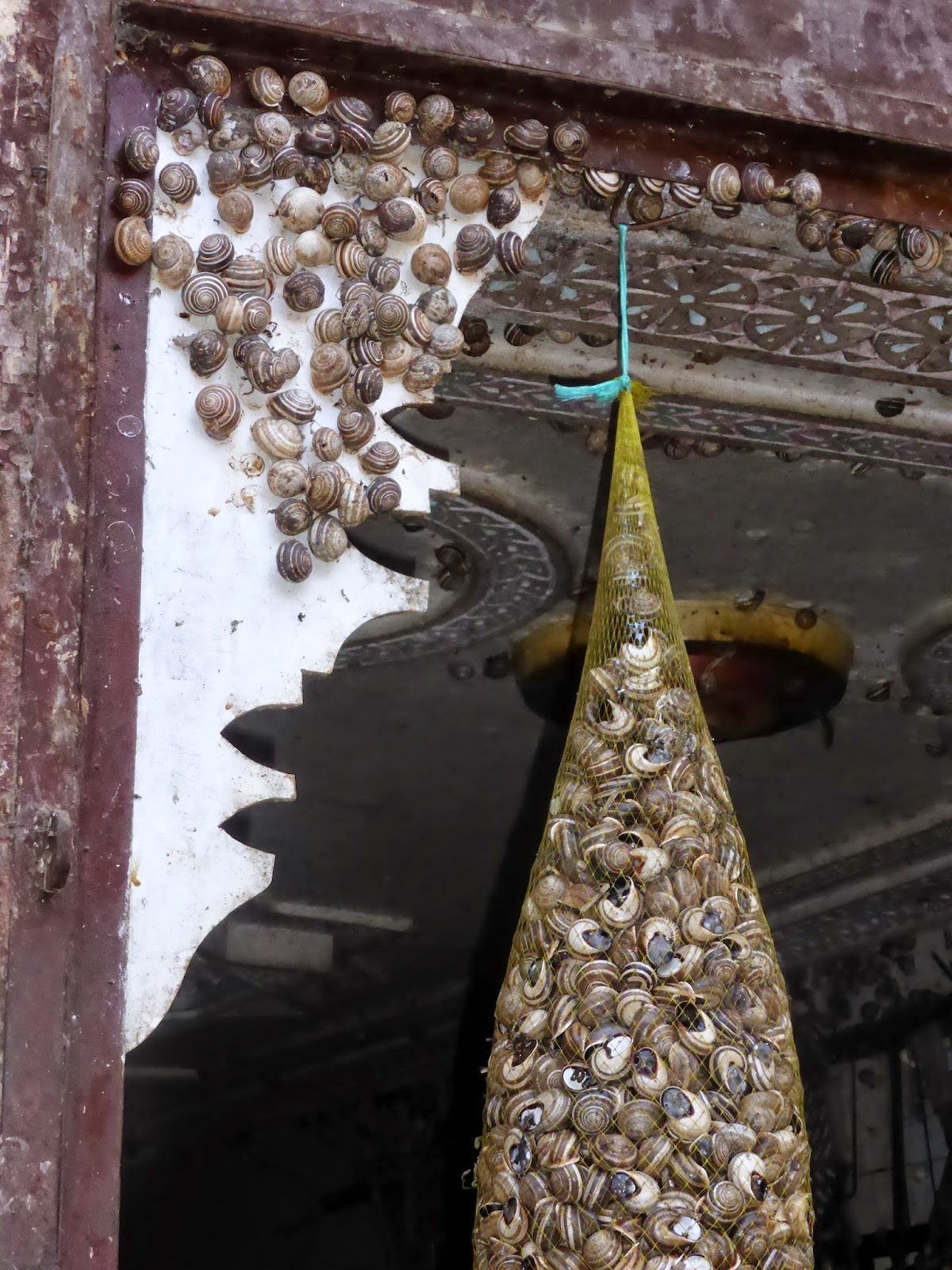
Snail Shop

Escapees look down on the captives.


Cooked Snail Stall
Menu - In the Shell or Snail Soup


Camel Meat Shop
+ Sebastian - he heard a lot of comments as he walked the streets. Finally he asked our guide, Tahar, what people were saying. Tahar laughed because they were calling Sebastian 'Ali Babar'. Ali  Babar had a red beard.

Spicy Olive Shop


Nougat Shop

Onion Delivery 

Fish Market, Essaouira

Freshly Squeezed Juice Shop

As we wandered through the different towns it was so refreshing not to see North American based, international fast food shops and their loud, in-your-face signage. 
We got the impression Moroccans still eat a lot of food prepared from scratch using fresh, locally grown vegetables, free-range raised animals for meat and dairy and many different native herbs and spices for their nutritional and medicinal effects.
There are restaurants, street stalls and hand-carts selling traditional fare and new restaurants featuring nouvelle cuisine still using local, fresh ingredients. 
A foody's paradise.

Sunday, February 8, 2015

Morocco - Dyeing and Leather in the Fez Medina

The tourist brochures talk of being in the Fez medina as stepping back into the Middle Ages. Many traditional skills are still practiced and old-world services still offered. This likely to be one of the reasons why it is a UNESCO World Heritage Site.
If you want a worn article of clothing freshened up, visit the street dyer, drop off your faded garment and  pick it up once it has been over-dyed.

The Fes medina has a dyers' district where dyeing skills have been handed down through many generations. Hand-woven woolen and cotton cloth, tanned hides of camels, goats, cattle and sheep are tanned and dyed at a number of different tanneries.

Earthen vats are filled with dye materials - ochre, poppy, pomegranate and henna for reds, date stones for light brown.

Fullers stomp on the hides in the vats then lift them out. It is back-breaking work for only the strongest. And the smell... but you probably don't notice it when you work there every day. Visiting tourists are handed a fresh sprig of mint to help the delicate ones cope with the smell. I found the smell to be not too bad, but I did remind myself we were there in winter. In the summer heat, I may have gagged.

The small yellow hides are saffron-dyed lamb skins to make the softest of leather.
From our high vantage point in a leather goods store's verandah, we stood for a long time watching all of the different activities going on.

Thursday, February 5, 2015

Morocco - More Things Textiley

Morocco has a number of different official uniforms but this was my favourite - red serge wool. 
The horse is decked out in various embellishments similar to the ones I showed here

Those trousers warrant a closer look.

They are finely gathered, as prep for smocking, the full length of the inside panels, allowing for great ease of movement when riding a horse or running after bad guys. It is a different solution to the other famous red serge uniform belonging to the Canadian Mountie, who opted for flared hip pants, originating from the Indian jodhpurs, for ease when riding.
The bunched up fabric makes many layers that trap air making them very much warmer than just a single layer of fabric. It is such an interesting variation on thermal insulation for a garment, compared with quilted layers of fabric.

When traveling I notice how women carry their children, particularly the traditional methods as opposed to encasing a child in a plastic carrier - don't get me started...
This woman is carrying a child on her back, leaving her hands free to do tasks and to carry things.

She has folded a large, square cloth diagonally and tied it across her shoulders. The child is safely off the ground and protected by the womans' body. The child has close contact with the woman while enjoying a stimulating view of her passing world.
We noticed Tahar's face light up whenever he saw a child and he often reached out to touch them affectionately. We decided he liked children and was maybe missing his own who were back at home.

While cruising a medina's labyrinth of streets, we met up with one of Tahar's cousins. Tahar and his cousin are Tuareg Berbers. His cousin was wearing their traditional dress and looked magnificent.

The white over-garment and shoulder scarf was a dramatic foil for the deep purple head gear and fringed scarf. His goat-hair, slipper-styled shoes are designed to be ideal for walking in the Saharan sand of the Tuareg's tribal lands.

The simple embellishment of the white garments contrasted with the elaborately patterned leather bag and silver jewellery.

Tahar has transitioned into a modern-day nomad, travelling repeatedly around his country with groups of tourists. His clothes reflect his new urban life and are in contrast with his cousin's traditional garments.

Monday, February 2, 2015

Morocco - Things Textiley I Saw

Our annual family holiday was spent in Morocco this year. As you can imagine I have many pics of this fascinating country. I want to show you a few of the textiley things we saw.
Above is a display in a pastmentarie shop of handmade braided belts ready for the discerning bride to select from. Many of these pastmentarie shops could be found together in every medina. They are filled to the ceilings with braids, tassels, cords, cloth covered with sequins.... Every one an Aladdin's Cave.

Here is our wonderful guide, Tahar, explaining how the door into a house/riad works and what all of the symbolic embellishments mean.
But look at what he is wearing over his clothes. It is the traditional Berber unisex onesie, called a djellaba. Everyone was wearing one because it was cold.

Tahar's djellaba had beautiful braiding along the front opening and all of the seams were embellished.


A braider at work in his shop making and attaching braid to a djellaba. I don't know if you can see all of those threads he is manipulating while he sews. It is one of the many, many traditional, specialised skilled jobs still being practiced in Morocco. This is a man's job. 
Our driver, Mohammed, had my favourite djellaba. He comes from the High Atlas mountains where his mother spun and wove (women's work) sheep's wool, maybe goat as well, cloth for his djellaba and his uncle made the braids. It is a rich brown colour, letting people know that Mohammed is an eligible bachelor. I was so engrossed listening to Mohammed talk about his beautiful djellaba I didn't think to take a picture.

While walking the dim, narrow streets of a medina one has to take care not to trip or be garrotted by the braid maker's tool at work. When he needs to make cord he puts his twisting machine out on the street because there is not enough room in his shop to stretch out the thread to make the meters of cord needed to make a braid.


This is the only woman I ever saw making cord. I thought she was very clever to use the holes left by the construction of the ancient city wall to hold the sticks she wrapped the thread around. She walked back and forth along the wall warping up the sticks before taking one out of the hole and twisting it to make the cord.
More posts on Morocco to come.